Contact
The Educational Mission of the Museum of Military History
At the core of our educational work is a mission that is ensured not only through museum educational activities, but also through appropriate and contemporary educational materials. With our diverse programme, tailored to a wide range of interests, we aim to address a broad audience. In recent years, we have fortunately recorded a significant increase in bookings.
Through accessible services (e.g. guided tours for people with visual impairments) and low prices for socially disadvantaged or low-income groups, we have already distinguished ourselves.
Our guided tours are historically well-founded and conducted with the aim of presenting multiple perspectives. The focus lies on historical narratives, contextualized in dialogue with visitors through exhibition objects. Our programmes are regularly updated in accordance with current academic research, continuously evaluated, and—particularly in the case of school tours—further developed in line with curriculum requirements.
Regular Exchange with Our Visitors
Through annual mailings of our school programmes, we seek to remain in contact with our regular audience and to attract new visitors from as broad a cross-section of the population as possible. In order to respond as effectively as possible to the individual needs and interests of participants, we keep group sizes small.
When dividing groups, the age of the visitors plays a crucial role. Primary school and kindergarten groups are supervised by two educators from the 18th child onwards. For adult groups, the maximum group size should be 25 participants.
Content Approach and Orientation of Our Programme
What happened in the past—and what can be derived from it for the present?
Active engagement with original and authentic objects forms the starting point of our historical education. Using exhibition objects, we address individuals and events and establish connections to historical lifeworlds. We examine the causes, dynamics, and consequences of war and violence, while raising awareness against prejudice and discrimination.
In order to strengthen students’ awareness of democracy, we engage with historical protagonists in their respective contexts and discuss with students their motivations and possible courses of action.
Cultural mediation at the HGM aims to open doors, enable personal approaches to historical content, encourage questions, and foster new perspectives.
Discussions are expressly encouraged.
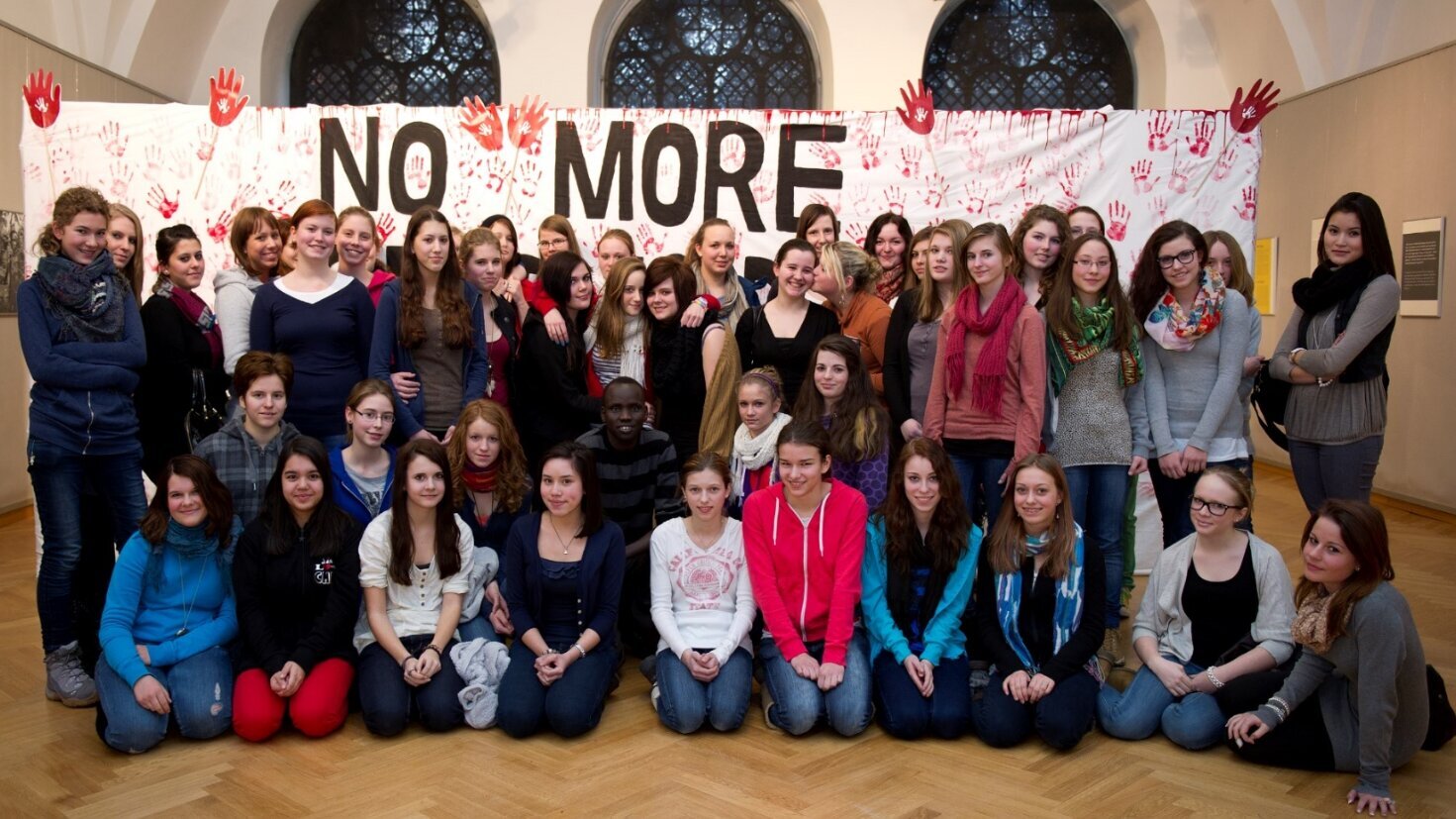
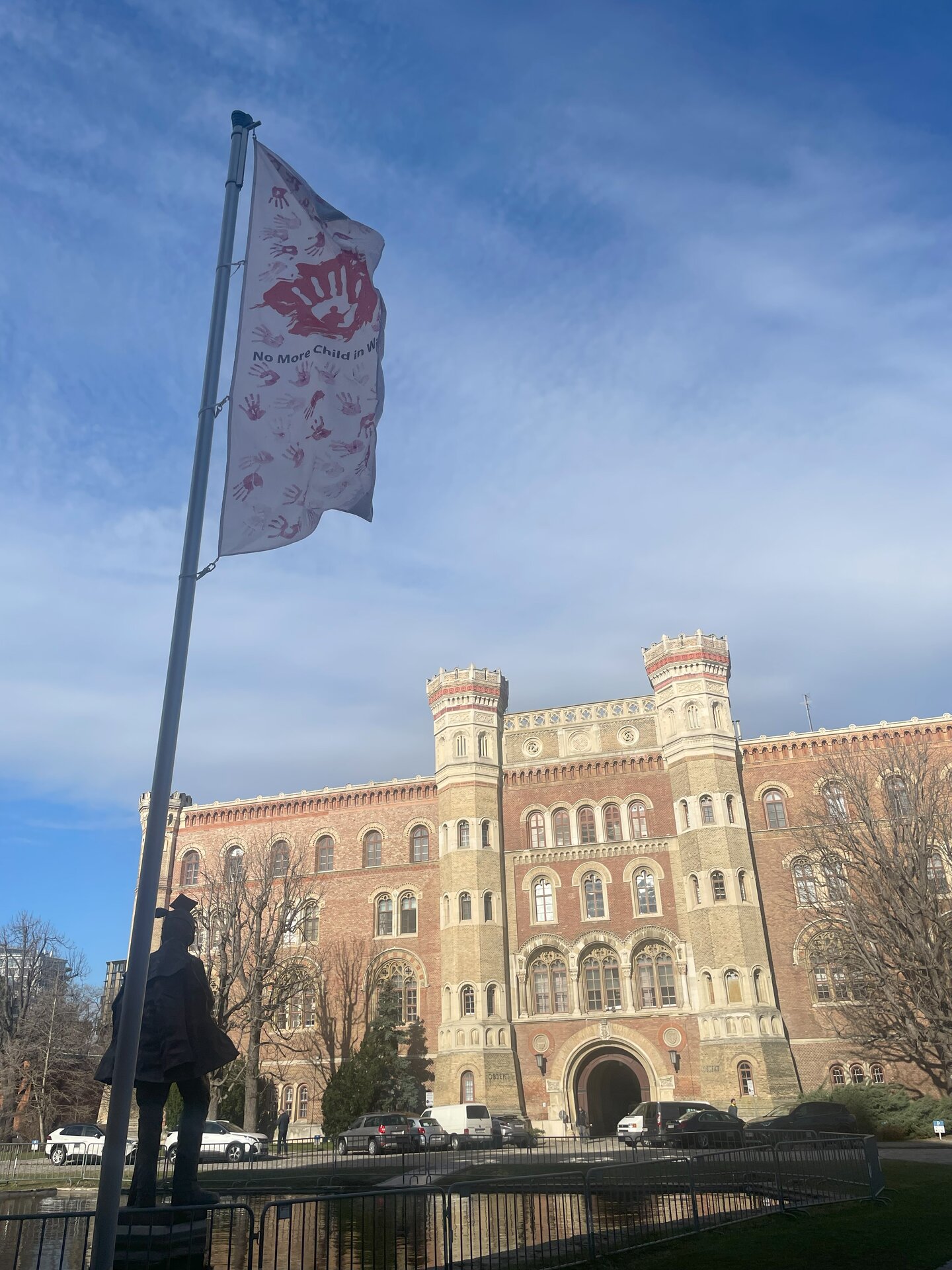
Activity Programme for Young People: “Children in Armed Conflicts”
Every February, on the occasion of the International Day Against the Use of Child Soldiers, the action week “Children in Armed Conflicts” takes place. During these five days, around 2,000 young people have the opportunity at the museum to speak with individuals who were recruited as child soldiers or who, as children, were subjected to other forms of violence in crisis regions.
Each year, the focus is placed on a different country or region.
Guests from South Sudan, Uganda and Syria, as well as from Iraq, Bosnia, and Afghanistan, have already visited the museum. Through their accounts, it becomes clear under what agonizing circumstances children grow up in war zones.
Within the framework of the programme, both the social, economic, and political situation in the affected countries and the significance and protection of human and children’s rights are discussed.
In preparation for the conversations, participants visit our permanent exhibition and engage with current global hotspots. A film analysis, using the example of other violent conflicts, further illustrates the horror and suffering that war brings to children.
Please note: This activity programme can be booked from Grade 8 onwards. Due to its realistic nature, the content may be psychologically distressing for younger students.
Eyewitnesses Share Their Stories
A particularly important aspect of our educational work is engagement with the period from 1938 to 1945.
In addition to our permanent programmes on this era, we also organize discussions with survivors of concentration camps. Their testimonies enable students to gain a personal and profound experience. They serve as a reminder not only that terrible crimes were committed in this country only a few decades ago, but also how essential it is to safeguard peace and freedom.
These conversations aim to foster awareness of human rights and tolerance and to encourage reflection on discrimination, xenophobia, and antisemitism in one’s own environment.
Our Wide Range of Programmes Emphasises Military History
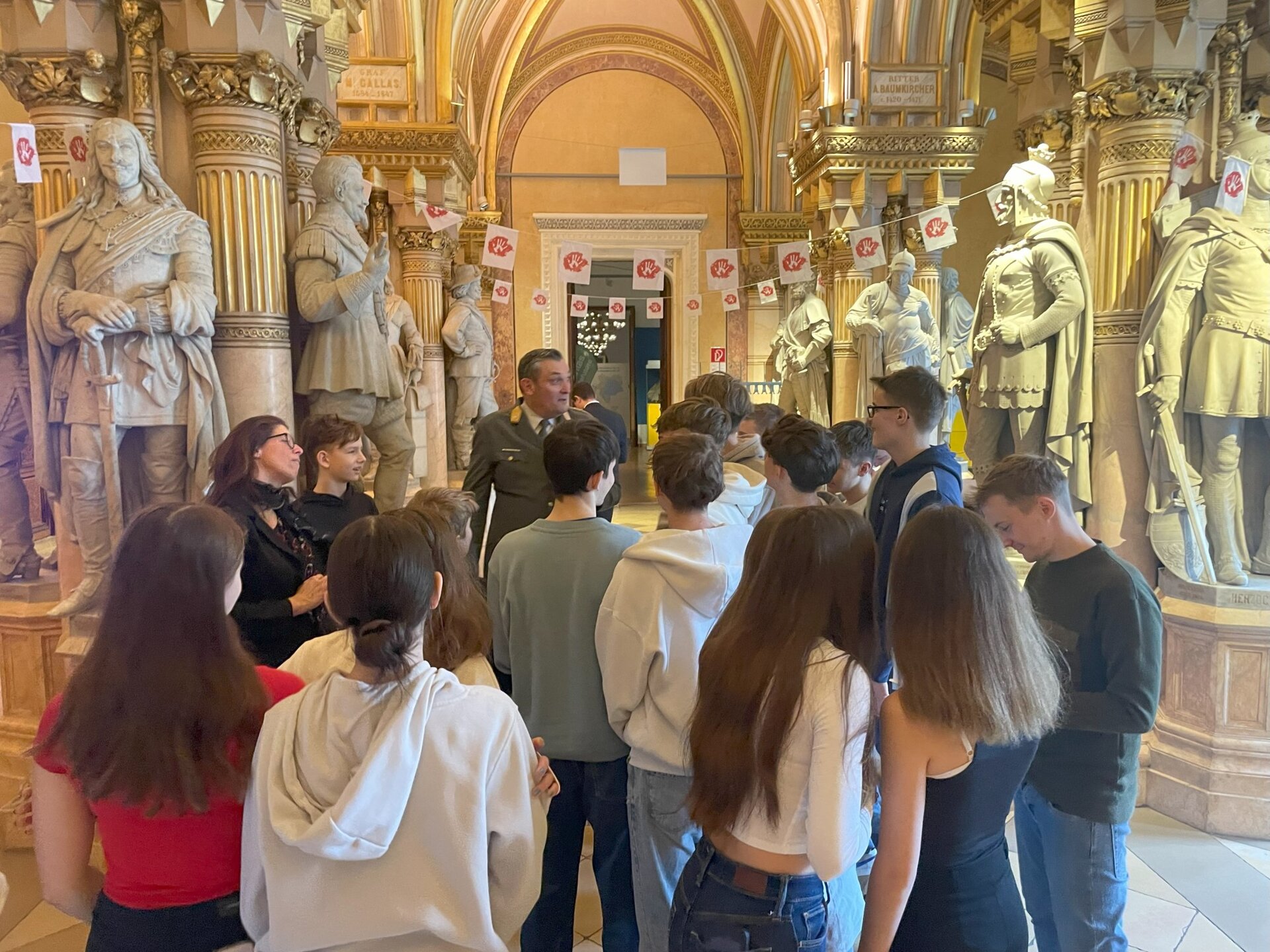
In its exhibitions, the Museum of Military History presents around 500 years of Austrian history across 6,500 m² of exhibition space. Tens of thousands of objects are on display. We therefore recommend setting thematic priorities during a guided visit.
The museum education team of the Museum of Military History offers a comprehensive programme tailored to all age groups, addressing a wide range of historical events and questions. The programmes for schools are aligned with the curriculum and serve either to prepare or to deepen classroom content.
Workshops and Individual Support
The workshop “Propaganda in the Third Reich” enables participants to understand mechanisms of mass persuasion and manipulation through film analysis. It examines how media can function as instruments of power and how critical questioning can help distinguish facts from fake news.
In order to ensure individual support, group sizes are kept as small as possible (we are happy to accommodate individual requests during registration).